 By A Zadid
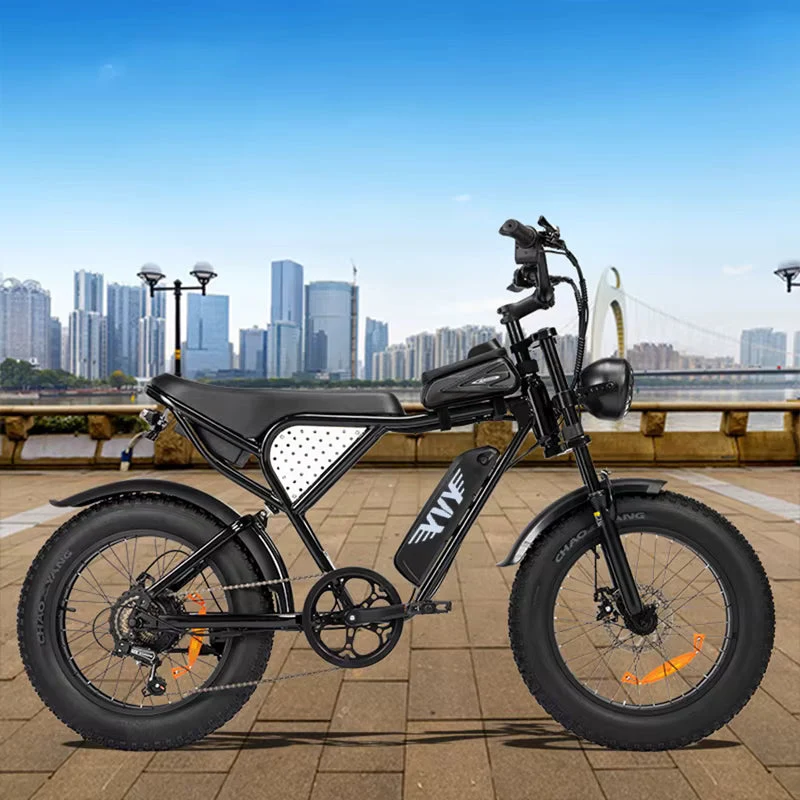
Choosing the right fat tire electric bike can be challenging, especially when two models share a similar design but offer different specifications and price points. Buyers often want a bicycle that delivers reliable performance, comfortable riding, sufficient battery capacity, and good value for money. The YVY K20 and K20 Lite are two options worth considering because they target riders with different budgets and riding requirements.
Both models feature a fat tire design intended for versatile riding, but their differences in motor performance, battery configuration, and braking systems can influence the overall ownership experience. Understanding these differences before purchasing can help buyers avoid paying for features they do not need or choosing a model that does not meet their expectations.
This YVY K20 vs K20 Lite comparison explores the important differences between the two models and explains which option may offer better value for different types of riders. Whether you are purchasing your first electric bicycle or upgrading your current ride, evaluating the specifications and intended use is an important step toward making the right decision.
Understanding the YVY K20 and K20 Lite
The YVY K20 and K20 Lite belong to the same fat tire electric bike family. Both are designed around a compact 20-inch wheel platform with wide tires, making them interesting options for riders who prefer a distinctive bicycle design and additional tire cushioning.
However, the two models are not identical in terms of their equipment.
The K20 is positioned as the more performance-oriented option, offering a higher-powered motor, a larger listed battery capacity, and hydraulic disc brakes. The K20 Lite focuses on providing a more budget-conscious alternative with a simpler component configuration.
This distinction makes the choice less about which bicycle looks better and more about identifying which specifications are worth paying for.
Motor Performance: Which Model Offers More Power?
Motor performance is one of the first differences buyers should examine when comparing electric bicycles.
The YVY K20 lists a 1500W brushless motor, while the K20 Lite lists a 1000W brushless motor. This difference makes the K20 the more powerful option according to the published specifications. The K20 product page also lists torque of up to 85Nm. Actual performance depends on controller settings, riding conditions, rider input, and applicable power restrictions.
For riders who frequently encounter hills, carry additional cargo, or travel across more demanding routes, the K20’s higher listed motor output may be attractive.
The K20 Lite may be sufficient for people whose journeys primarily involve relatively flat roads, neighborhood trips, and moderate recreational riding. Riders should still consider their weight, route conditions, and local electric bicycle regulations before selecting either model.
It is also important to distinguish between nominal and peak motor power when comparing electric bicycles. Buyers should verify how the manufacturer describes the motor rating on the current product listing rather than comparing figures without understanding their meaning.
Battery Capacity and Riding Range
Battery capacity is another major consideration when deciding between the K20 and K20 Lite.
The YVY K20 lists a removable 48V 20Ah battery. Its official product listing advertises a riding range of up to 50 miles in pure electric mode and up to 75 miles in pedal-assist mode. These figures represent advertised maximum ranges, not guaranteed distances for every rider. <Cite refs={[“turn776463search7″,”turn776463search0”]}/>
The K20 Lite also features a removable 48V battery, but its published capacity information should be checked carefully. Different sections of the available listing and comparison material show inconsistent capacity figures. Buyers should confirm the current specification directly on the official product page before making a purchase decision. <Cite refs={[“turn776463search8″,”turn776463search1”]}/>
Actual riding range depends on several factors:
- Rider weight and additional cargo.
- Road conditions and elevation changes.
- Selected pedal-assistance level.
- Riding speed and acceleration.
- Tire pressure and weather conditions.
- Battery condition and temperature.
For commuters who travel longer distances regularly, the K20’s listed 20Ah battery may provide a useful advantage. However, someone making short daily trips may find a smaller battery configuration sufficient.
Braking System: Hydraulic vs Mechanical Disc Brakes
Braking performance is particularly important when choosing a heavier electric bicycle with fat tires.
One of the significant differences between the two models is their braking configuration.
The YVY K20 comes with hydraulic dual disc brakes, while the K20 Lite uses mechanical disc brakes according to the published comparison.
Hydraulic disc brakes transmit braking force through hydraulic fluid. They generally provide smoother modulation and require less hand effort at the brake lever. This can be beneficial during frequent braking, longer descents, and rides where additional stopping confidence is desirable.
Mechanical disc brakes use cables to transfer force from the brake lever to the braking mechanism. They are generally simpler to adjust and can be more accessible for owners who prefer basic maintenance.
Neither system eliminates the need for regular inspection. Brake pad condition, rotor condition, correct adjustment, and riding technique all influence stopping performance.
For riders who prioritize stronger braking performance and smoother lever operation, the K20’s hydraulic system may justify the additional investment. Those who prefer simpler maintenance may appreciate the K20 Lite’s mechanical setup. <Cite refs={[“turn776463search0″,”turn776463search8”]}/>
Design, Tires, and Everyday Riding Comfort
Both bicycles share several important design features.
The published comparison identifies the following shared equipment:
- 20-inch by 4.0-inch fat tires.
- Shimano 7-speed drivetrain.
- Multifunction LCD display.
- Listed maximum load capacity of 330 lbs.
- Removable battery configuration.
These shared features mean that buyers do not necessarily need to choose the more expensive model simply to obtain the fat tire design.
Wide tires can provide additional cushioning and traction in suitable riding conditions. They may be useful on gravel, compact dirt, and certain uneven surfaces. However, tire performance also depends on tread design, pressure, and road conditions.
The Shimano 7-speed drivetrain provides multiple gearing options to help riders manage different gradients and riding situations.
Both models also list an LCD display for accessing riding information. Buyers should check the current product descriptions for the precise display functions and included equipment. <Cite refs={[“turn776463search0″,”turn776463search7”]}/>
K20 or K20 Lite: Which Is Better for Different Riders?
The best choice depends on how frequently you ride, the distances you cover, and the features you value most.
Choose the YVY K20 If You Prioritize Performance
The K20 may be the better option for riders who want additional motor capability, a larger listed battery, and hydraulic braking.
It is worth considering if:
- You regularly travel across hilly routes.
- You plan to cover longer commuting distances.
- You frequently carry additional cargo.
- You prefer hydraulic disc brakes.
- You want a higher-capacity listed battery.
- You value additional performance headroom.
The K20’s specifications make it a stronger candidate for riders whose regular journeys place greater demands on the motor and battery.
Choose the YVY K20 Lite If You Prioritize Budget
The K20 Lite is positioned as a more affordable alternative for buyers who want a fat tire electric bicycle without paying for every upgrade available on the K20.
It may be appropriate if:
- Your budget is relatively limited.
- Your regular routes are mostly flat.
- You mainly use your bicycle for shorter journeys.
- You are comfortable with mechanical disc brakes.
- You do not require the K20’s higher listed motor output.
The important consideration is whether the lower purchase cost matches your actual riding requirements. A cheaper bicycle is not automatically better value if its specifications do not support your intended use.
How to Compare YVY Fat Tire Bikes Before Purchasing
When you compare YVY fat tire bikes, it is useful to evaluate the complete ownership experience rather than concentrating exclusively on motor power.
Start by estimating your regular travel distance. Consider whether you will use the bicycle for commuting, recreational cycling, shopping, or mixed-surface riding.
Next, examine battery capacity and charging convenience. A removable battery can be particularly useful if you need to charge it separately from the bicycle.
Braking performance should also be part of your decision. Riders who frequently encounter hills, traffic, or situations requiring repeated stops may place greater importance on hydraulic braking.
Finally, consider the bicycle’s weight, frame dimensions, recommended rider height, maintenance requirements, and available warranty support.
For a more detailed model-by-model breakdown, the K20 or K20 Lite comparison from YVY provides additional information about the differences and intended use cases.
It is also worth checking the official product pages before purchasing because specifications, prices, promotions, and available configurations can change.
Price and Long-Term Value Considerations
Price is often one of the deciding factors when choosing between two similar electric bicycles.
The K20 Lite is designed to offer a lower-cost entry into the K20 family, while the K20 provides additional equipment that may be valuable to riders with more demanding requirements.
However, the purchase price is only one part of the overall cost.
Buyers should also consider battery replacement, brake servicing, tire replacement, routine maintenance, and the availability of compatible components.
Mechanical brakes may appeal to people who prefer straightforward cable adjustments and maintenance. Hydraulic brakes may offer better lever feel and braking performance but require appropriate servicing when maintenance is necessary.
Battery capacity also influences long-term convenience. A bicycle that comfortably supports your daily travel requirements may be a better investment than a cheaper model that regularly requires additional charging.
The right purchase is therefore the model that offers the best balance between initial cost, specifications, and expected use.
Important Things to Check Before Ordering
Before placing an order for either model, review the current official product listing carefully.
Pay particular attention to the following:
Battery specifications: Confirm the exact voltage, amp-hour capacity, removable design, and charging information.
Motor rating: Check the manufacturer’s stated nominal and peak power descriptions, where available.
Braking configuration: Confirm whether the bicycle comes with hydraulic or mechanical disc brakes.
Rider compatibility: Review the recommended rider height and maximum payload.
Warranty coverage: Understand which components are covered and the applicable warranty conditions.
Local regulations: Check whether the motor rating, assisted speed, and bicycle configuration comply with the laws where you intend to ride.
These checks can help prevent misunderstandings and make the purchasing process more straightforward.
Final Verdict: Is the YVY K20 Worth the Upgrade?
The YVY K20 and K20 Lite offer two different approaches to fat tire electric cycling. Both share several design characteristics, but their motor, battery, and braking specifications create meaningful differences.
The K20 is the stronger choice for buyers who value higher listed motor output, a larger specified battery, and hydraulic disc brakes. It may provide better overall value for people who regularly ride longer distances, encounter hills, or carry additional loads.
The K20 Lite is a sensible alternative for budget-conscious shoppers who mainly travel shorter distances on relatively flat routes and do not need the additional equipment offered by the K20.
Ultimately, neither model is automatically the best choice for everyone. The right decision depends on your budget, riding environment, travel distance, and expectations.
Take time to compare the current product specifications, verify the battery details, and evaluate the differences in braking performance before ordering. By focusing on the features that matter most to your everyday riding needs, you can choose the YVY model that offers the most suitable combination of performance, convenience, and value.