 By A Zadid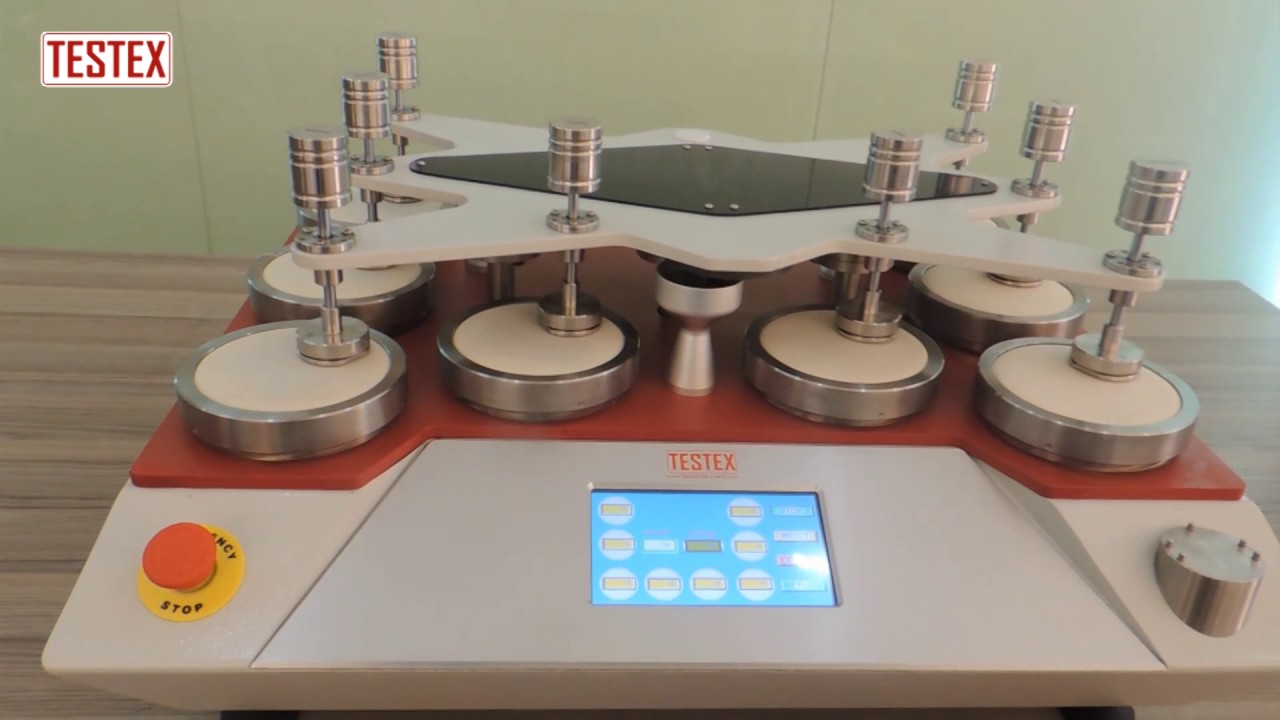
In the modern textile landscape, the transition from a raw fiber to a high-performance consumer product is governed by rigorous quality control. As global competition intensifies, manufacturers can no longer rely on visual intuition alone to determine the durability of a fabric. Instead, they must turn to empirical data provided by specialized laboratory equipment. Two of the most critical instruments in this journey are the Pilling Tester and the Martindale Abrasion Tester. These machines serve as the ultimate gatekeepers of quality, ensuring that every yard of fabric leaving a mill can withstand the mechanical stresses of daily life without losing its aesthetic appeal or structural integrity.
The Fundamental Role of the Martindale Abrasion Tester
The Martindale Abrasion Tester is engineered to simulate the repetitive friction that fabrics encounter in real-world applications, such as the constant sliding of a person onto a car seat or the rubbing of a sleeve against a desk. The brilliance of this machine lies in its unique movement—the Lissajous pattern. Unlike a simple back-and-forth motion, which only stresses fibers in one direction, the Martindale method creates a complex, overlapping geometric curve. This ensures that the fabric is rubbed across the warp, the weft, and the bias, providing a truly 360-degree assessment of wear resistance.
When a technician sets up a Martindale Abrasion Tester, they mount a circular specimen of the fabric into a holder. This holder is then weighted—typically with 9kPa for apparel or 12kPa for upholstery—and placed against a standard abradant, usually a specific type of wool fabric. As the machine cycles, it tracks the number of “rubs.” The goal is to identify the “end point,” which is the exact moment the fabric fails. For woven materials, this is usually defined as the breakage of two or more threads. For knitted fabrics, the appearance of a hole signifies the end of the test. The resulting “Martindale Score” is a vital metric that retailers use to categorize fabrics as “Light Domestic,” “General Domestic,” or “Heavy Duty Commercial.”
Addressing Surface Degradation with the Pilling Tester
While abrasion testing focuses on the destruction of the fabric’s structure, the Pilling Tester focuses on its visual degradation. Pilling—the formation of small, unsightly fiber balls—is a primary cause for consumer dissatisfaction and product returns. It occurs when loose fibers migrate to the surface of the fabric and, through friction, become entangled. This is particularly prevalent in synthetic blends where the high strength of fibers like polyester prevents the “pills” from falling off naturally.
A Pilling Tester uses the same mechanical framework as the abrasion unit but operates under different parameters. The stroke length is typically reduced to 24mm, and the pressure applied is much lighter. In many cases, the fabric is rubbed against itself rather than an abrasive wool cloth. After a predetermined number of cycles—often 500, 1,000, or 2,000—the specimens are removed and evaluated. Using a specialized light box, technicians compare the samples to a set of five standard photographs. Grade 5 indicates no pilling, while Grade 1 indicates severe pilling. This grading system allows manufacturers to adjust their spinning and finishing processes to minimize fuzzing before the garment ever reaches a retail shelf.
Technological Advancements: The Smartindale Innovation
The evolution of testing equipment has led to the development of “smart” machines like the ChiuVention Smartindale. This advanced version of the Martindale Abrasion Tester incorporates dual-servo motors and digital algorithms to replace traditional gear-driven systems. In older machines, mechanical wear on the gears could lead to a distortion of the Lissajous pattern over time, compromising the accuracy of the test. The Smartindale eliminates this risk, ensuring that the friction applied is perfectly consistent across every station.
Furthermore, modern labs require higher throughput. A 9-head Pilling Tester configuration allows for the simultaneous testing of multiple batches, significantly reducing the time required for research and development. The integration of IoT technology means that lab managers can now monitor the status of an ongoing test via a smartphone app. If a sample fails or the machine completes its cycle, the operator receives an instant notification. This automation reduces human error and allows laboratory personnel to focus on data analysis rather than machine monitoring.
Conclusion: A Dual-Pronged Approach to Quality
Ultimately, a comprehensive quality assurance program requires both the Pilling Tester and the Martindale Abrasion Tester. One ensures that the fabric stays strong, while the other ensures it stays beautiful. By adhering to international standards such as ISO 12947 and ISO 12945, manufacturers can provide their clients with verifiable proof of quality. In an era where sustainability and “slow fashion” are becoming more important, the ability to produce textiles that last for years—rather than weeks—is a significant competitive advantage. These testers are not just laboratory tools; they are the foundation of consumer trust in the textile industry.